When Kenyans search for Starlink Kenya prices, they are rarely looking for a single number. The true cost of Starlink in Kenya is a multi-part figure — it includes the one-time hardware kit price, the monthly subscription fee, professional installation charges, optional accessories, and the ongoing total cost of ownership. Get any one of these wrong, and you could either be surprised by the bill or miss out on a more affordable entry path.
This article gives you the complete, up-to-date Starlink Kenya price breakdown for 2026. Every figure is in Kenyan shillings. You will find hardware costs, all monthly plan fees, real-world installation estimates, payment flexibility options, cost-per-year scenarios for different user types, and a clear comparison against Safaricom fibre, Airtel 4G, and legacy VSAT services.
Whether you are a household in rural Nakuru trying to decide if Starlink is affordable, an SME owner evaluating the business case, or a lodge manager exploring off-grid connectivity, this guide answers the question: how much does Starlink really cost in Kenya in 2026?
For purchasing and installation support, trusted providers include Orbitlink Solutions, Starlink Nairobi Installers, and Satellite Internet Installers Kenya.
1. How Starlink Pricing Works in Kenya: The Three-Part Cost
Unlike mobile data or fixed fibre — where you typically pay one monthly bill — Starlink Kenya pricing has three distinct components that must be understood separately before calculating your total investment.
1.1 The Hardware Cost (One-Time)
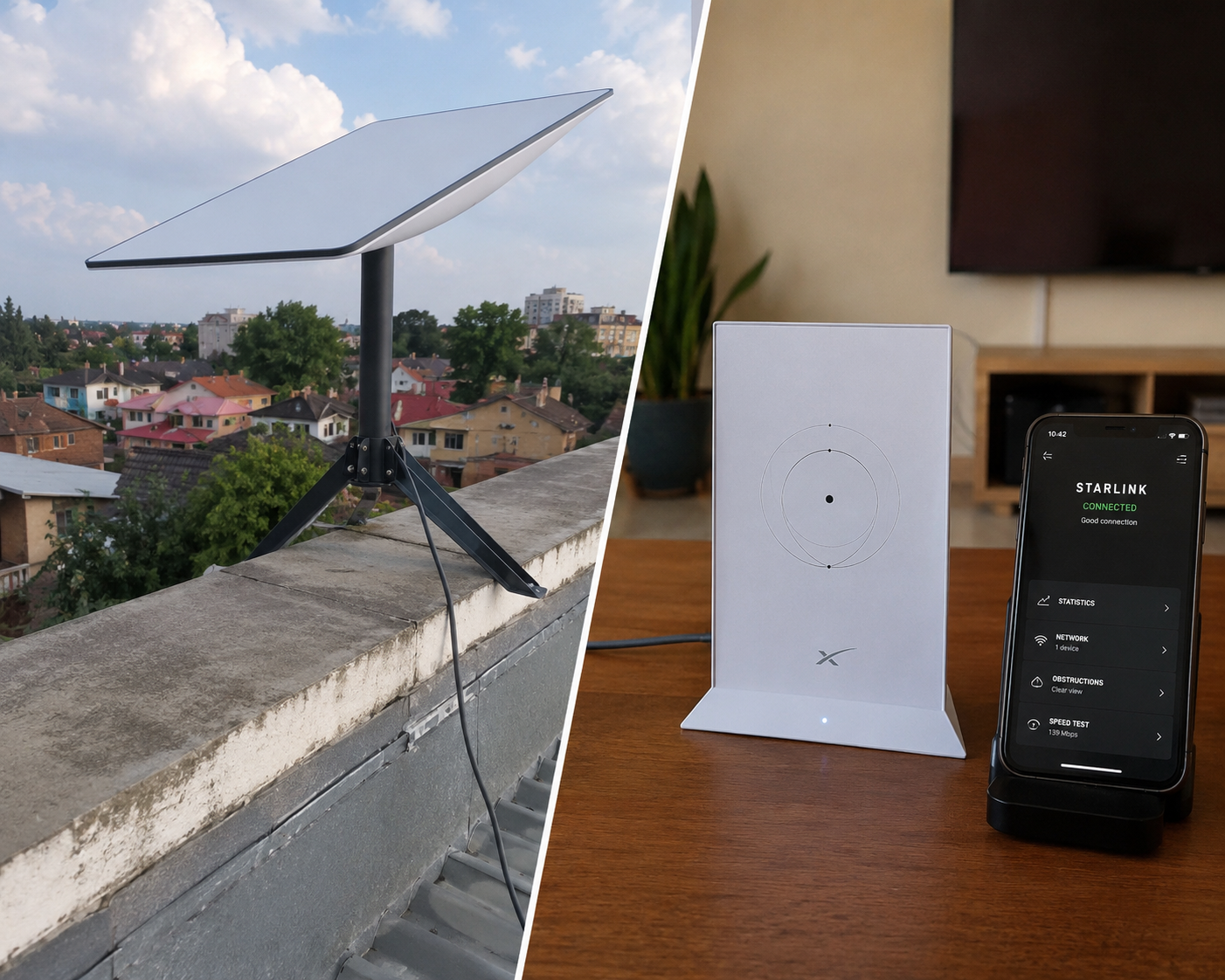
The first and largest upfront expense is the Starlink kit. This includes the satellite dish (the self-aligning antenna), a Wi-Fi 6 router, cables, and a basic mounting base. You must own or rent the hardware before you can subscribe to any service plan. Hardware is a capital expense — paid once — and is yours to keep.
1.2 The Monthly Subscription Fee (Recurring)
After purchasing the hardware, you pay a separate monthly fee for internet service. This is entirely independent of the hardware cost. Monthly subscription rates in Kenya range from KES 1,300 for the entry-level 50 GB plan to KES 81,432 for the top-tier Business Priority 6 TB plan. The most widely used plan — Residential Unlimited — costs KES 6,500 per month.
1.3 Installation Costs (One-Time or Occasional)
Starlink is designed for self-installation and most users can set it up in under 30 minutes using the Starlink app. However, professional installation — particularly for roof mounts, multi-building setups, or commercial deployments — carries an additional one-time cost. Professional installation in Kenya typically starts at KES 5,500 for a standard residential setup and increases for complex configurations.
Understanding all three components is essential because most guides quote only the monthly fee, leaving buyers surprised by the total investment required in the first month.
2. Starlink Kit Prices in Kenya 2026: Full Hardware Cost Breakdown
Below is a complete summary of all Starlink hardware options currently available in Kenya, including the instalment and rental alternatives introduced in 2026.
|
Hardware Kit |
Price (KES) |
Best Use |
Notes |
|
Starlink Mini Kit |
27,000 |
Portable / remote work |
Solar-compatible; lightest kit |
|
Starlink Standard Kit (V4) |
49,900–55,000 |
Fixed home or office |
Gen 3 V4; highest performance |
|
Flat High-Performance Kit |
377,000+ |
Maritime / aviation / enterprise |
Ruggedised; IP56 rated |
|
Mini Kit — Instalment Plan |
6,750 upfront + 4,500 × 6 months |
Budget entry |
Plus KES 16,250 activation + KES 3,010 shipping |
|
Hardware Rental (Mini) |
1,950/month |
No-commitment option |
No upfront ownership |
2.1 Starlink Mini Kit — KES 27,000
The Starlink Mini is the most affordable hardware option available in Kenya and represents the single biggest reduction in Starlink's price barrier since its 2023 launch. Introduced to the Kenyan market in September 2024, the Mini weighs just 1.1 kg and folds to fit inside a backpack. It uses the same Low Earth Orbit (LEO) satellite network as all Starlink kits but is optimised for portability and moderate data use.
At KES 27,000, the Mini is compatible with every Starlink service plan — Residential, Residential Lite, Roam, and Business Priority — giving buyers maximum plan flexibility at minimum hardware cost. It is solar-compatible, drawing low DC power, making it the preferred choice for off-grid homes, safari lodges, and rural schools without reliable mains electricity.
• Kit includes: Compact dish, Wi-Fi 6 mini router, power cable, and kick stand mount
• Speeds: 50–150 Mbps download; adequate for streaming, video calls, and remote work
• Coverage area: Up to 185 sq metres — suitable for small homes and single-floor offices
• Self-install: Yes, under 30 minutes
• Solar-compatible: Yes
2.2 Starlink Standard Kit (Gen 3 V4) — KES 49,900 to KES 55,000
The Standard Kit is Starlink's primary hardware for fixed residential and commercial installations. The current generation — Gen 3 V4 — features a higher-gain antenna, wider beam angle, and the Starlink Gen 3 router with Wi-Fi 6 and 4 × 4 MIMO technology. It delivers stronger signal reception, more consistent high speeds, and greater stability under adverse weather compared to the Mini.
For households, offices, schools, and businesses where the dish will be permanently mounted, the Standard Kit offers the best performance-per-shilling value. Prices across Kenyan resellers range from KES 49,900 to KES 55,000 depending on the retailer and whether accessories are bundled.
• Kit includes: Standard dish, Gen 3 Wi-Fi 6 router, 15-metre cable, mounting base
• Speeds: 150–220 Mbps download; up to 300 Mbps in optimal conditions
• Coverage area: Up to 297 sq metres — suitable for medium offices and large homes
• Latency: 20–40 ms
• Weather resistance: IP56 rated (wind and water resistant)
2.3 Flat High-Performance Kit — KES 377,000+
The Flat High-Performance kit is engineered for demanding commercial deployments — maritime vessels, aircraft, large commercial farms, oil and gas facilities, and enterprise networks requiring ruggedised, always-on connectivity. Its design tolerates extreme weather, vibration, and temperature variation far beyond the capabilities of the consumer kits.
At KES 377,000 and above, this hardware is an enterprise-grade capital investment. It is the required hardware for Starlink Maritime and Aviation plans. Organisations considering this kit should engage a specialist reseller for site surveys and configuration advice.
Enterprise and maritime Starlink hardware deployments are supported by Satellite Internet Installers Kenya.
2.4 The Mini Kit Instalment Plan — From KES 6,750 Upfront
In January 2026, Starlink introduced a structured instalment payment plan for the Mini kit in Kenya — a direct response to the persistent barrier that upfront hardware costs present in a price-sensitive market. The instalment plan converts the capital purchase into a series of smaller monthly payments, aligning with Kenya's M-Pesa mobile payment culture.
Here is the full cost structure of the instalment plan:
• Upfront hardware payment: KES 6,750 (75% discount off the full KES 27,000 retail price)
• Activation fee: KES 16,250 (mandatory, paid upfront)
• Shipping and handling: KES 3,010 (paid upfront)
• Total first payment: KES 26,010
• Monthly hardware instalment: KES 4,500 × 6 months
• Monthly service fee: KES 6,500 (standard Residential plan)
• Total monthly commitment during instalment period: KES 11,000/month
• Total cost over the first 6 months: approximately KES 92,010
After the 6-month instalment period, the hardware is fully paid off and the monthly commitment drops to KES 6,500 — the standard Residential subscription fee. This option is ideal for users who can afford monthly payments but struggle with the full upfront kit cost.
2.5 Hardware Rental Option — KES 1,950/Month
For users who prefer not to own the hardware at all, Starlink offers a rental option at KES 1,950 per month. This is in addition to the monthly service subscription fee — meaning total monthly outlay under the rental model is KES 8,450 (KES 1,950 hardware rental + KES 6,500 service). The rental option suits users testing the service, those in temporary locations, or businesses managing capital expenditure carefully.
3. Starlink Monthly Subscription Prices in Kenya 2026
The monthly subscription fee is the ongoing cost of Starlink internet service in Kenya. All prices below exclude 16% VAT — add 16% to calculate your actual billed amount. The table below summarises every available plan.
|
Plan |
Monthly Fee (KES) |
Data |
Best For |
|
50 GB Plan |
1,300 |
50 GB capped |
Light users, backup connections |
|
Residential Lite |
4,000 |
Unlimited (deprio.) |
Budget households, moderate use |
|
Residential (Unlimited) |
6,500 |
Unlimited priority |
Homes, SMEs, fixed offices |
|
Roam / Mobile Regional |
14,000 |
Unlimited mobile |
Nomads, field teams, travel |
|
Business Priority 40 GB |
8,000 |
40 GB priority |
Small teams, backup |
|
Business Priority 1 TB |
13,572 |
1 TB priority |
Medium offices, schools |
|
Business Priority 2 TB |
27,144 |
2 TB priority |
Large organisations |
|
Business Priority 6 TB |
81,432 |
6 TB priority |
Data-intensive enterprises |
3.1 50 GB Plan — KES 1,300/Month
At KES 1,300 per month, the 50 GB plan is Starlink's entry-level service and the most affordable broadband option on the platform. Once the 50 GB data allocation is exhausted, internet speeds are throttled to significantly reduced levels for the remainder of the billing cycle. This plan is best suited as a supplementary connection, a budget starter option, or for very light users who primarily check email and browse rather than stream or work remotely at high data volumes.
3.2 Residential Lite — KES 4,000/Month
Residential Lite offers unlimited data at KES 4,000 per month — KES 2,500 less than the full Residential plan. The trade-off is network deprioritisation: during periods of high network congestion (typically weekday evenings, 6 PM to 11 PM), Lite users are queued behind full Residential and Business Priority subscribers for available bandwidth. Outside peak hours, performance is often indistinguishable from the full Residential plan.
For households that primarily use the internet during the day — remote workers, students, homemakers — Residential Lite represents excellent value. At KES 4,640 per month after VAT, it brings unlimited satellite broadband within reach of a wider slice of Kenya's middle-income market.
3.3 Residential (Unlimited) — KES 6,500/Month
The Residential Unlimited plan at KES 6,500 per month is the cornerstone of Starlink Kenya pricing — the plan most households, rural properties, SMEs, and fixed offices should default to. At approximately KES 7,540 per month after VAT, it delivers unlimited high-speed internet with no hard data caps and priority access on the network ahead of Lite users.
Typical download speeds under this plan range from 150 to 200 Mbps during off-peak hours and 80 to 120 Mbps during peak evening congestion. This performance profile is sufficient for 4K streaming on multiple devices simultaneously, uninterrupted video conferencing, online gaming, large file uploads and downloads, and all common remote work tasks.
For bundle purchasing guidance and residential plan setup, visit Starlite Internet Kenya.
3.4 Roam (Mobile Regional) — KES 14,000/Month
The Roam plan at KES 14,000 per month is Starlink's most flexible service option, removing the fixed-address restriction of the Residential plan and allowing the subscriber to use their Starlink dish anywhere within Kenya and across a growing number of regional countries. This plan experienced 900 percent year-on-year growth in Kenyan search interest, reflecting high demand from remote workers, field engineers, digital nomads, and businesses with multiple or frequently changing locations.
A standby (pause) feature is available at KES 500 per month — instead of paying the full KES 14,000 during periods when you are not actively travelling or using the Roam capability. This makes the Roam plan more financially manageable for seasonal users or professionals who only travel for part of the year.
• Monthly cost: KES 14,000 (~KES 16,240 after VAT)
• Pause option: KES 500/month standby fee
• Coverage: All of Kenya + regional mobility
• In-motion use: Up to 16 kph (stationary or slow-moving vehicles)
For Roam plan availability and pricing across Kenya, see SpaceLink Kenya.
3.5 Business Priority Plans — KES 8,000 to KES 81,432/Month
Business Priority plans are designed for organisations that cannot tolerate network deprioritisation during peak hours. These plans grant subscribers permanent priority status on Starlink's network — meaning business users always receive available bandwidth ahead of Residential and Lite subscribers. Additional features include a public static IPv4 address (essential for hosting servers, VPNs, or remote monitoring systems) and 24/7 priority customer support.
• Priority 40 GB: KES 8,000/month — small teams, backup links
• Priority 1 TB: KES 13,572/month — medium offices, schools, medical facilities
• Priority 2 TB: KES 27,144/month — larger organisations, hotels
• Priority 6 TB: KES 81,432/month — data-intensive enterprises, ISPs, and aggregators
Business Priority plans and enterprise Starlink solutions in Kenya are available through Starlink Kenya and specialist installer Orbitlink Solutions.
4. Starlink Installation Costs in Kenya 2026
While Starlink hardware is engineered for self-installation, professional installation is the recommended approach for most permanent setups — particularly where the dish needs to be roof-mounted, cable routing must be concealed, or Wi-Fi coverage needs to be extended across a multi-room property or office floor.
4.1 Standard Residential Installation
A standard Starlink residential installation — covering dish mounting on an accessible roof or wall, cable routing to the router, router placement, and activation — typically costs from KES 5,500 to KES 8,000 in Nairobi and major urban centres. Costs for the same installation in more remote counties may be higher due to travel and logistics.
• Basic ground/pole mount (self-standing): KES 0 (included in kit) or KES 2,000–4,000 for an upgraded mount
• Standard roof mount + cable routing: KES 5,500–8,000
• High-rise or complex roof mount: KES 8,000–15,000
4.2 Commercial & Enterprise Installation
For businesses, schools, lodges, and multi-building deployments, installation complexity increases significantly. Professional commercial installation typically includes site surveying, structural bracket mounting, weatherproof cable management, network switch integration, Wi-Fi access point placement, and firewall or router configuration.
• Small business / single office: KES 10,000–18,000
• Multi-floor office or school: KES 18,000–35,000
• Remote lodge / farm with cable extensions: KES 20,000–40,000
• Maritime or vehicle installation: Custom quote required
Professional installation services nationwide are available through Starlink Kenya Installers and Starlink Nairobi Installers.
4.3 Optional Accessories & Add-On Costs
Beyond installation labour, certain accessories add to the total setup cost depending on your site conditions:
• Extended Starlink cable (18 m or 30 m additional): KES 2,000–5,000
• Starlink Ethernet Adapter: KES 2,500–3,500
• Pipe / J-mount or chimney mount bracket: KES 2,500–5,500
• Solar backup system for off-grid use: KES 10,000–20,000 (varies by capacity)
• Shipping and handling (from Starlink directly): KES 3,010–3,100
5. Total Cost of Ownership: Real-World Starlink Kenya Price Scenarios
The tables above give you the individual components. This section puts them together into realistic total cost scenarios for different user profiles, so you can make an accurate financial comparison rather than a one-number comparison.
|
User Profile |
Kit Cost (KES) |
Setup (KES) |
Monthly (KES) |
Year-1 Total (KES) |
|
Budget rural home (Mini + Lite) |
27,000 |
5,500 |
4,000 |
93,500 |
|
Standard home (Standard + Residential) |
55,000 |
8,000 |
6,500 |
141,000 |
|
Nomad / field worker (Mini + Roam) |
27,000 |
0 |
14,000 |
195,000 |
|
SME office (Standard + Biz 1TB) |
55,000 |
12,000 |
13,572 |
235,864 |
|
Instalment plan (Mini, Month 1–6) |
6,750 |
5,500 |
11,000 (incl. instalment) |
~116,260 |
Notes: Setup cost includes professional installation labour. Year-1 totals include hardware + setup + 12 months of service. The instalment plan scenario assumes the hardware is fully paid after month 6, with monthly costs dropping to KES 6,500 thereafter. All figures exclude VAT.
Looking at Year-1 total cost of ownership, the Standard Residential plan at KES 141,000 (approximately KES 11,750/month amortised) remains the most popular and cost-efficient choice for fixed locations. While the monthly fee of KES 6,500 is two to three times higher than entry-level Safaricom fibre, the critical distinction is availability: in rural areas where fibre is simply absent, Starlink is not competing with fibre — it is the only viable high-speed broadband option.
6. Starlink Kenya Price History: How Costs Have Changed Since 2023
Understanding how Starlink Kenya prices have evolved since launch provides important context. The trajectory has been consistently downward — both for hardware and, to a lesser extent, monthly fees.
• July 2023 (launch): Standard Kit — KES 89,000; Monthly service — KES 6,500
• April 2024: Standard Kit price cut to KES 45,500 — a 48.9% hardware reduction
• July 2024: Standard Kit adjusted to KES 45,500–49,900 range
• September 2024: Starlink Mini Kit introduced at KES 27,000 — new entry price point
• Mid-2024: Hardware rental option introduced at KES 1,950/month
• January 2026: Instalment payment plan launched for Mini kit — KES 6,750 upfront entry
• 2026 (current): Standard Kit KES 49,900–55,000; Mini Kit KES 27,000; Monthly from KES 1,300
The pattern is clear: hardware costs have dropped by nearly 70 percent since launch, and access flexibility has increased dramatically through rental and instalment options. Monthly service fees have remained stable at KES 6,500 for the Residential plan since launch — a consistent recurring cost that reflects Starlink's global pricing structure rather than Kenyan market adjustments.
Industry analysts anticipate continued hardware price reductions as the satellite constellation reaches full density over East Africa and competition from Safaricom's expanding fibre footprint and Airtel's 5G home broadband intensifies.
7. Starlink Kenya Prices vs. Competitors: Is It Worth the Cost?
The most common question after the raw price is: does Starlink Kenya justify its cost compared to alternatives? Below is a comprehensive side-by-side comparison.
|
Metric |
Starlink Residential |
Safaricom Fibre |
Airtel 4G Home |
VSAT (Legacy) |
|
Monthly fee |
KES 6,500 |
KES 2,500–5,000 |
KES 1,500–3,500 |
KES 15,000–40,000 |
|
Setup / hardware |
KES 27K–55K |
Free–KES 5,000 |
Free |
KES 150K–300K |
|
Typical download |
150–220 Mbps |
20–100 Mbps |
5–50 Mbps |
5–20 Mbps |
|
Latency |
20–40 ms |
5–20 ms |
30–80 ms |
500–700 ms |
|
Rural availability |
100% Kenya |
Urban only |
Partial |
Yes (costly) |
|
Data caps |
Unlimited / 50 GB |
Unlimited |
Capped |
Capped |
|
Portability |
Yes (Roam plan) |
No |
Yes |
No |
|
Contract required |
No |
No |
No |
Often 1–2 yrs |
The comparison reveals where Starlink Kenya prices represent strong value and where they do not. For urban Nairobi residents with access to Safaricom's fibre network, Starlink's KES 6,500/month is two to three times more expensive than a comparable fibre plan. The performance difference is marginal in urban areas — fibre is marginally faster during peak hours — making Starlink a premium backup or lifestyle choice rather than an economic default in cities.
However, for the majority of Kenya — rural counties, peri-urban towns, coastal areas, national parks and conservancies, islands in Lake Victoria, and remote highland farms — Starlink's price is not being compared to KES 2,500 Safaricom fibre. It is being compared to unreliable, capped, and slow 4G data at KES 1,500–3,500 per month, or to no viable broadband at all. In that context, KES 6,500 for unlimited 150–200 Mbps internet is transformative — and, given the productivity gains for remote workers, businesses, and schools, it frequently represents a net positive economic case.
For a full comparison of Starlink pricing against local providers across different Kenyan regions, visit Starlink Kenya.
8. Payment Options for Starlink Kenya Prices
Starlink has adapted its payment infrastructure specifically for Kenya's mobile-first, M-Pesa-centric economy. The following payment methods are currently accepted:
• M-Pesa (Lipa na M-Pesa): Accepted for both hardware purchases and monthly subscription renewals — the most commonly used payment method in Kenya
• Visa / Mastercard: International credit and debit cards accepted for all transactions
• Instalment Plan: KES 6,750 upfront + KES 4,500/month for 6 months (Mini kit only)
• Hardware Rental: KES 1,950/month — no upfront hardware purchase required
• Service Pause: Pay only KES 500/month standby fee during periods when you are not actively using the service (available on Residential and Roam plans)
The acceptance of M-Pesa is significant. Mobile money dominates financial transactions for Kenyan households earning less than KES 50,000 per month. The ability to pay monthly Starlink fees via M-Pesa on Safaricom removes the need for a bank account or international payment card, opening the service to a substantially larger potential subscriber base.
For guidance on purchasing and payment methods, including M-Pesa setup, visit Starlite Internet Kenya's purchase guide.
9. Who Gets the Best Value from Starlink Kenya Prices?
Not all Kenyan internet users will find Starlink Kenya prices equally compelling. Here is an honest analysis of who gets the most and least value from each price tier.
Best Value: Rural and Peri-Urban Households
Kenyan families living beyond the reach of Safaricom fibre or in areas with poor 4G signal gain the most from Starlink's Residential plan. For KES 6,500 per month, they receive a quality of internet service — 150+ Mbps, unlimited data, low latency — that was previously only available to urban fibre subscribers. The economic and educational impact of reliable broadband access in these communities easily justifies the monthly cost.
Best Value: Remote Businesses, Lodges & Schools
Farms, safari lodges, boarding schools, rural hospitals, and any organisation whose operations depend on internet access but sits outside fibre coverage areas represents Starlink's most economically compelling use case. The cost of even brief internet outages — disrupted point-of-sale systems, failed video consultations, stalled online exams — frequently exceeds Starlink's monthly fee many times over. For these users, Starlink Kenya prices are not high; they are lower than the cost of unreliable internet.
Reasonable Value: Urban Households Seeking Reliability
Urban households in Nairobi, Mombasa, or Kisumu with existing fibre access will pay a premium for Starlink. However, as a backup connection — or in areas of these cities where fibre availability is inconsistent — the reliability, speed, and nationwide coverage of Starlink provide genuine value at KES 6,500/month. For households where internet downtime directly translates to income loss (freelancers, online business owners), Starlink as a secondary link is economically rational.
Challenging Value: Price-Sensitive Urban Users
For urban Kenyan households where Safaricom fibre is readily available and reliable, switching entirely to Starlink at KES 6,500/month when fibre costs KES 2,500–5,000/month is difficult to justify on price alone. The performance difference in urban areas is minimal. Starlink Kenya prices make the most economic sense the further from fibre coverage a user sits.
For independent advice on Starlink value for your specific location, consult SpaceLink Kenya or Satellite Internet Installers.
10. How to Minimise Your Starlink Kenya Price
Several strategies can reduce the total cost of Starlink in Kenya without sacrificing service quality:
1. Start with the Mini Kit: At KES 27,000, the Mini is KES 22,900–28,000 cheaper than the Standard Kit. For most household users, its speeds (50–150 Mbps) are more than sufficient.
2. Use the Instalment Plan: If the KES 27,000 upfront cost is a barrier, the KES 6,750 entry option spreads the hardware cost over six months, making the first month's total outlay approximately KES 26,010 instead of KES 33,000+.
3. Consider Residential Lite: At KES 4,000/month (vs KES 6,500 for Residential Unlimited), Lite saves KES 30,000 per year. For daytime-heavy users, the off-peak performance is nearly identical.
4. Self-Install: The Starlink app's obstruction-detection and positioning tools make DIY installation reliable. Skipping professional installation saves KES 5,500–12,000.
5. Pause During Absence: If you travel frequently or have a seasonal property, pausing your service at KES 500/month saves KES 6,000–13,500 per absent month.
6. Share Costs: Starlink's router supports multiple connected devices and, in some configurations, can serve multiple neighbouring households. Cost-sharing arrangements are common in rural Kenyan communities where several families split one Starlink subscription.
Frequently Asked Questions: Starlink Kenya Prices
How much does Starlink cost per month in Kenya?
Starlink Kenya monthly prices range from KES 1,300/month (50 GB plan) to KES 6,500/month (Residential Unlimited) for home users, KES 14,000/month for the Roam plan, and KES 8,000 to KES 81,432/month for Business Priority tiers. After adding 16% VAT, the Residential Unlimited plan costs approximately KES 7,540/month.
How much is the Starlink kit price in Kenya 2026?
The Starlink Mini Kit costs KES 27,000. The Standard Kit (Gen 3 V4) costs KES 49,900 to KES 55,000 depending on the reseller. The Flat High-Performance Kit for maritime and enterprise use starts at KES 377,000. An instalment option allows you to start with just KES 6,750 upfront for the Mini kit.
What is the cheapest way to get Starlink in Kenya?
The cheapest entry point is the Mini Kit instalment plan: KES 6,750 upfront hardware payment plus KES 16,250 activation and KES 3,010 shipping, with six monthly hardware instalments of KES 4,500 alongside the KES 6,500 monthly service fee — totalling approximately KES 11,000/month for the first six months. Alternatively, the 50 GB plan at KES 1,300/month is the lowest monthly commitment.
How much does Starlink installation cost in Kenya?
Professional Starlink installation in Kenya starts at approximately KES 5,500 for a standard residential roof mount and cable routing. Commercial and enterprise installations range from KES 10,000 to KES 40,000 depending on complexity, building height, cable routing distance, and location.
Can I pay for Starlink Kenya using M-Pesa?
Yes. Starlink accepts M-Pesa (Lipa na M-Pesa) for both hardware purchases and monthly subscription fees, alongside Visa and Mastercard. M-Pesa is the most commonly used payment method for Starlink in Kenya.
Is Starlink more expensive than Safaricom fibre in Kenya?
Yes, in urban areas where fibre is available. Starlink Residential costs KES 6,500/month versus KES 2,500–5,000/month for Safaricom fibre. However, Safaricom fibre is available only in select urban centres. In rural counties and peri-urban areas where fibre is absent, Starlink has no direct competitor for high-speed broadband, making its pricing effectively its own benchmark.
Are Starlink prices in Kenya likely to drop further in 2026?
Historically, Starlink has reduced hardware prices consistently — from KES 89,000 at launch to KES 27,000 for the Mini kit in 2024. Increased satellite density over East Africa, growing competition from Safaricom fibre and Airtel 5G, and Starlink's Direct-to-Cell partnership with Airtel all create pressure toward lower prices. Further reductions are expected, though the timing and magnitude are not confirmed.
Does Starlink charge for shipping in Kenya?
Yes. Starlink charges approximately KES 3,010 to KES 3,100 for shipping and handling on kit orders delivered to Kenyan addresses. Some resellers offer free shipping on orders above KES 50,000.
Is there a contract or lock-in with Starlink Kenya?
No. Starlink Kenya plans have no long-term contracts. You can cancel, pause, or switch plans at any time. The service pause option at KES 500/month provides maximum flexibility for seasonal or intermittent users.
Conclusion: Understanding the Full Starlink Kenya Price Picture
The complete Starlink Kenya price in 2026 is not a single number — it is the sum of your chosen hardware, your monthly service plan, installation costs, and the time period over which you spread the investment. For most Kenyan home users choosing the Residential Unlimited plan with the Standard Kit and professional installation, the first-year cost is approximately KES 141,000, amortising to around KES 11,750 per month. By year two — hardware fully paid for — the monthly cost drops to just KES 6,500.
Compared to the previous generation of satellite internet (VSAT at KES 15,000–40,000/month with KES 150,000–300,000 hardware costs), Starlink Kenya prices represent a fundamental disruption. Compared to urban fibre, they carry a premium that narrows with every hardware price reduction Starlink introduces. And compared to the absence of any viable high-speed broadband — the reality for millions of Kenyans in rural and remote areas — Starlink Kenya prices represent not a luxury but a gateway.
The trajectory is clear: Starlink Kenya prices are falling, payment flexibility is increasing, and the case for satellite broadband across Kenya grows stronger with every quarter. Whether you are ready to connect now or evaluating your options, the most important step is an accurate understanding of the full cost — which this guide has provided.
Ready to check your options? Explore Starlink Kenya prices and packages at Starlink Kenya, get a reseller quote from Orbitlink Solutions, or contact an installer via Starlink Kenya Installers.